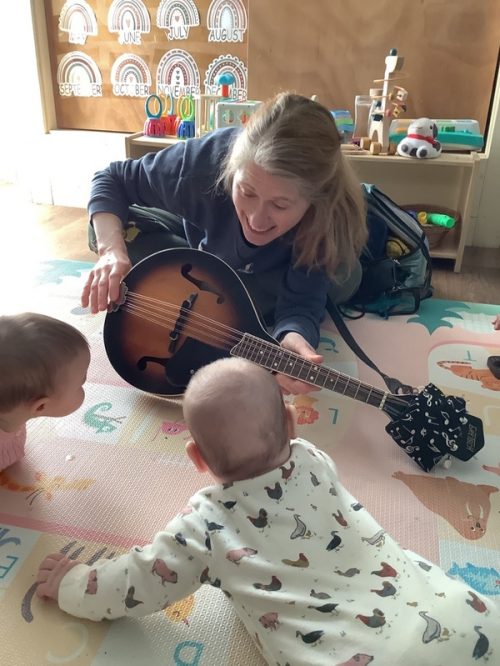
Infancy is a time of rapid growth, discovery, and developing independence. Our infant curriculum recognizes that every interaction is a learning opportunity. Teachers intentionally use caregiving routines, play, movement, sensory experiences, relationships, and exploration to support each child’s development while following their individual cues and interests.
For infants, learning begins with relationships. Teachers spend time getting to know each child’s unique communication, temperament, interests, routines, and ways of exploring. These relationships allow teachers to recognize what a child is communicating and determine when to offer support, introduce a new experience, or allow a child to continue exploring independently.
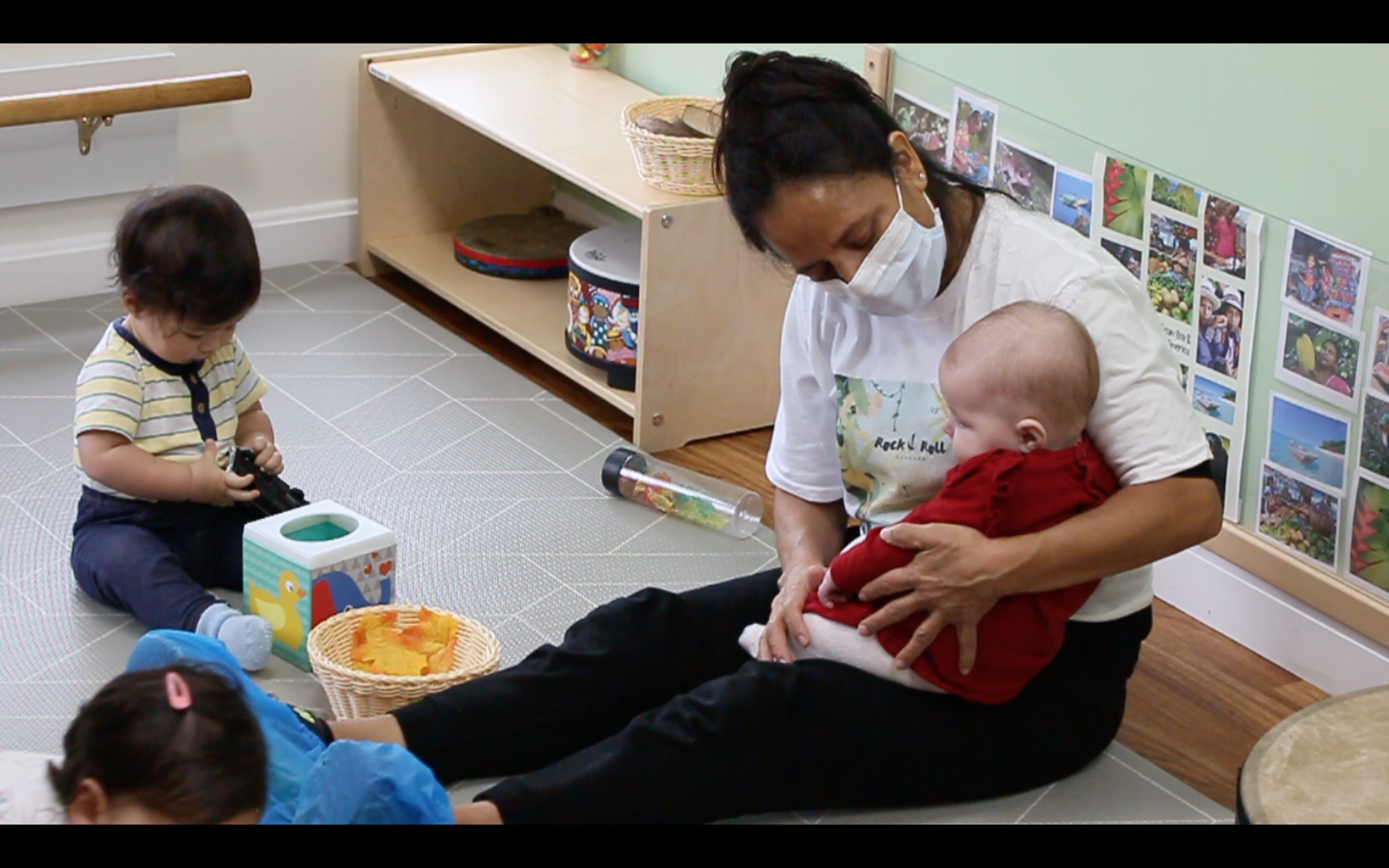
Infants learn through their whole bodies and senses. Teachers provide safe, developmentally appropriate opportunities for children to:
Infant curriculum changes significantly as children grow. Young infants are primarily discovering their bodies, senses, relationships, and immediate surroundings. Teachers provide opportunities for safe sensory exploration, movement, communication, and connection while closely following each child’s cues.
As infants become more mobile, their desire to explore expands. Mobile infants are increasingly able to move toward what interests them, make choices, interact with materials, and communicate their ideas. Teachers adapt the environment to encourage this growing independence while providing opportunities for more complex exploration, problem-solving, social interaction, and self-help skills.
Rather than separating learning into specific lessons, teachers build these experiences into the natural rhythm of the infant’s day. A diaper change can become an opportunity for communication. Mealtime can support independence and sensory exploration. Floor play can encourage movement and problem-solving. Looking at a book can become a shared conversation. The everyday moments are the curriculum.
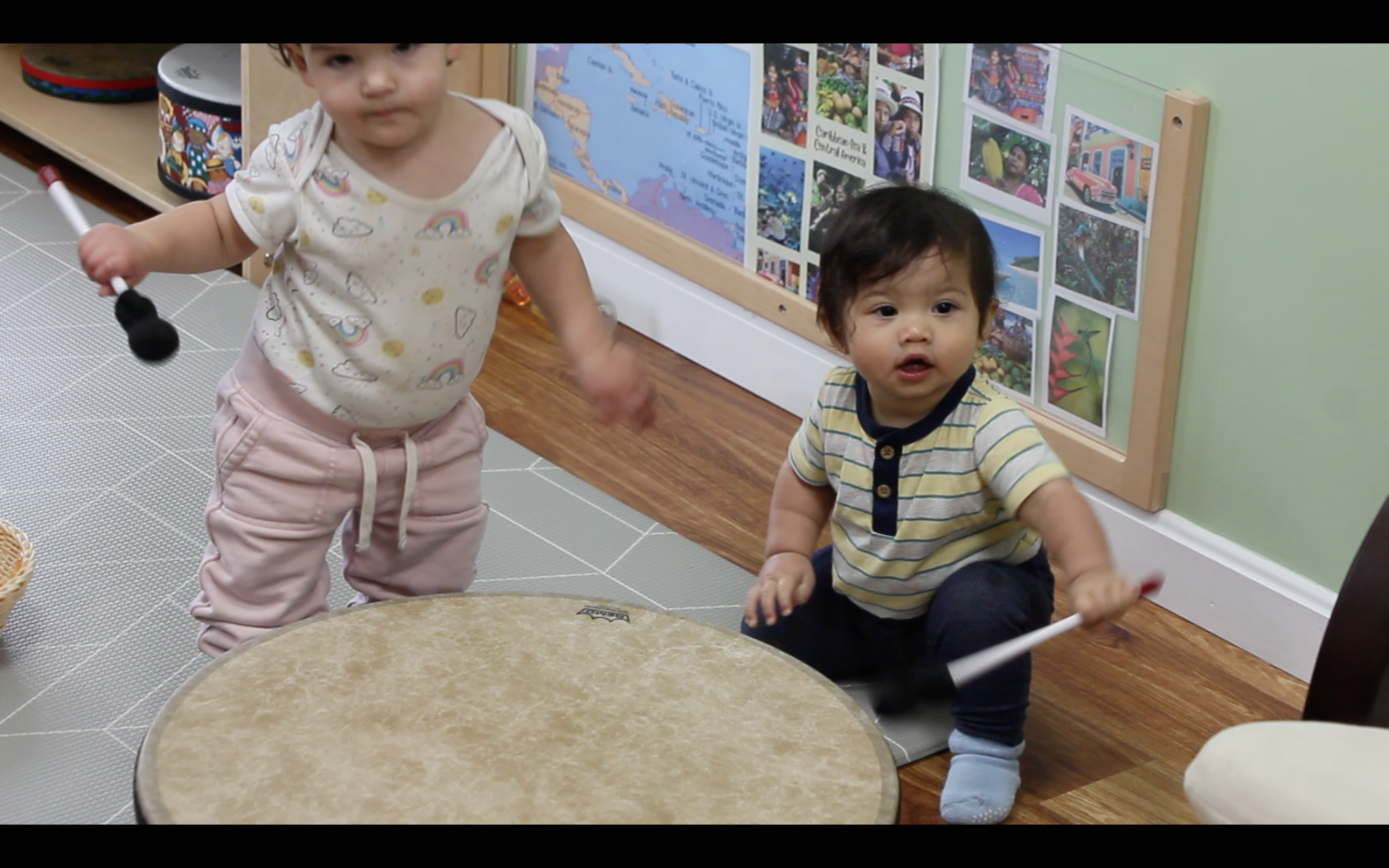
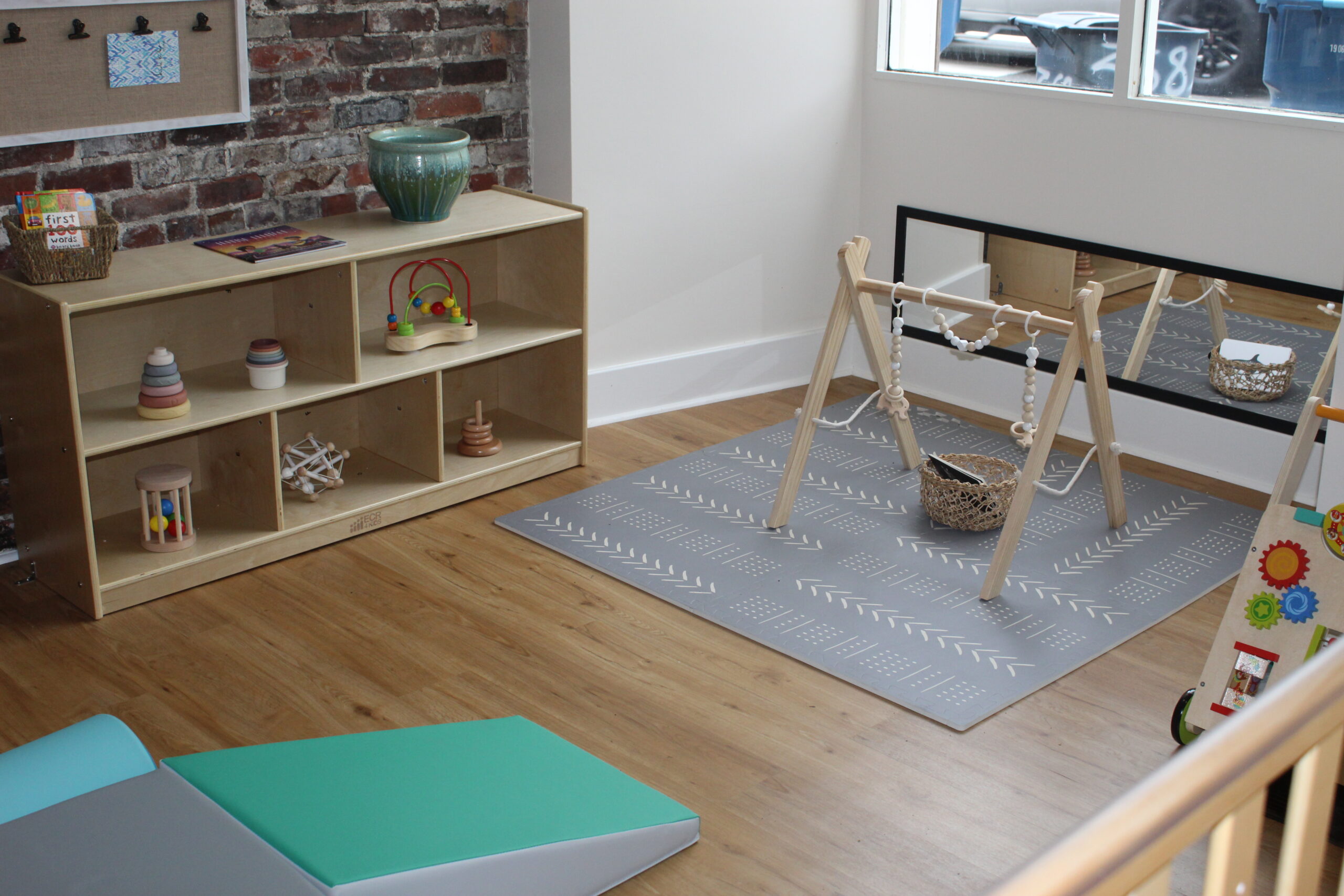
Infant classrooms are intentionally arranged to encourage safe exploration, movement, connection, and discovery. Materials are selected and rotated based on children’s developmental needs and emerging interests. Teachers observe how children interact with their environment and use those observations to determine what materials, experiences, and challenges to introduce next.
As infants become increasingly mobile, the environment evolves with them. Children are encouraged to move, investigate, make choices, and develop confidence in their ability to explore their surroundings.
Our goal is not simply to prepare infants for the next classroom. It is to meet them where they are, understand what they are ready to discover, and provide meaningful opportunities to grow from there.
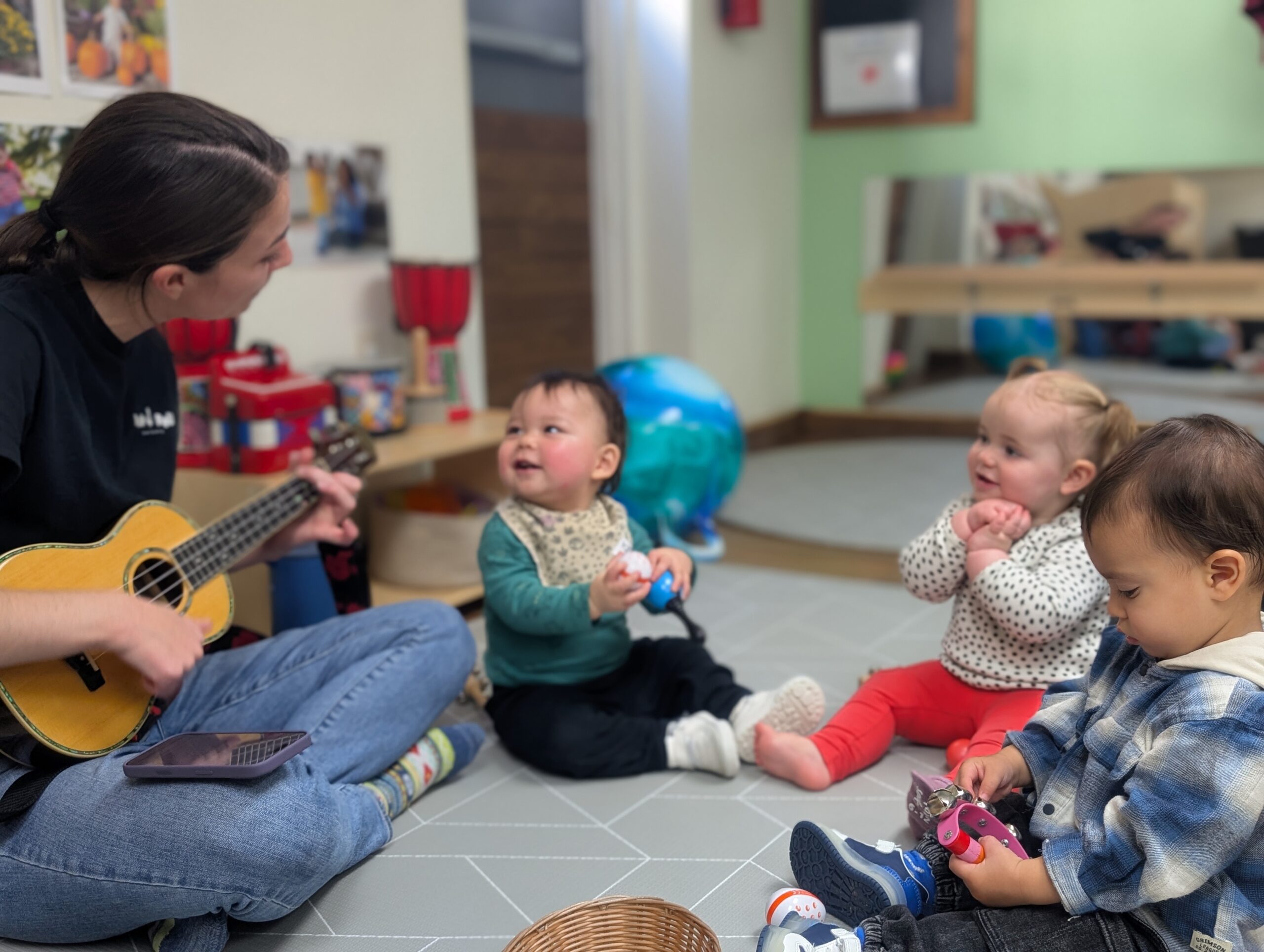
For infants, music is a natural part of the day. Through our daily live music classes, as well as music experiences in the classroom, infants have opportunities to listen, respond, move, vocalize, and connect with familiar adults.
Music helps infants become aware of different sounds, voices, rhythms, and patterns. Music Specialists use singing, humming, instruments, movement, and a variety of musical styles and traditions to introduce infants to different sounds and ways of expressing music. Wordless singing and simple vocal sounds also give infants opportunities to listen to changes in pitch and respond with their own sounds. Pitch and tone matter more than lyrics. Our specialists often hum or sing without words first, and they use different instruments with distinctive sounds.
Music is about much more than learning songs. For infants, it provides opportunities to:
Teachers and Music Specialists follow each infant’s developmental stage and interests, creating opportunities for children to participate in ways that feel comfortable and meaningful to them.
Music provides infants with another way to communicate, connect, explore, and express themselves while supporting development across the curriculum.