
The toddler and two-year-old years are a time of growing independence, communication, curiosity, and big emotions. Children are becoming increasingly confident in expressing what they want, making choices, exploring their environment, and interacting with the people around them. Our curriculum builds on these emerging skills by providing opportunities for children to move, explore, communicate, experiment, problem-solve, and develop independence through meaningful play and everyday experiences.
At Rock and Roll Daycare, we use the term Toddlers and Twos to recognize that this stage of development is not defined by a single birthday or milestone. Children develop at different rates, and our classrooms are designed to support the progression from emerging toddler skills through the increasingly independent skills of two-year-olds.
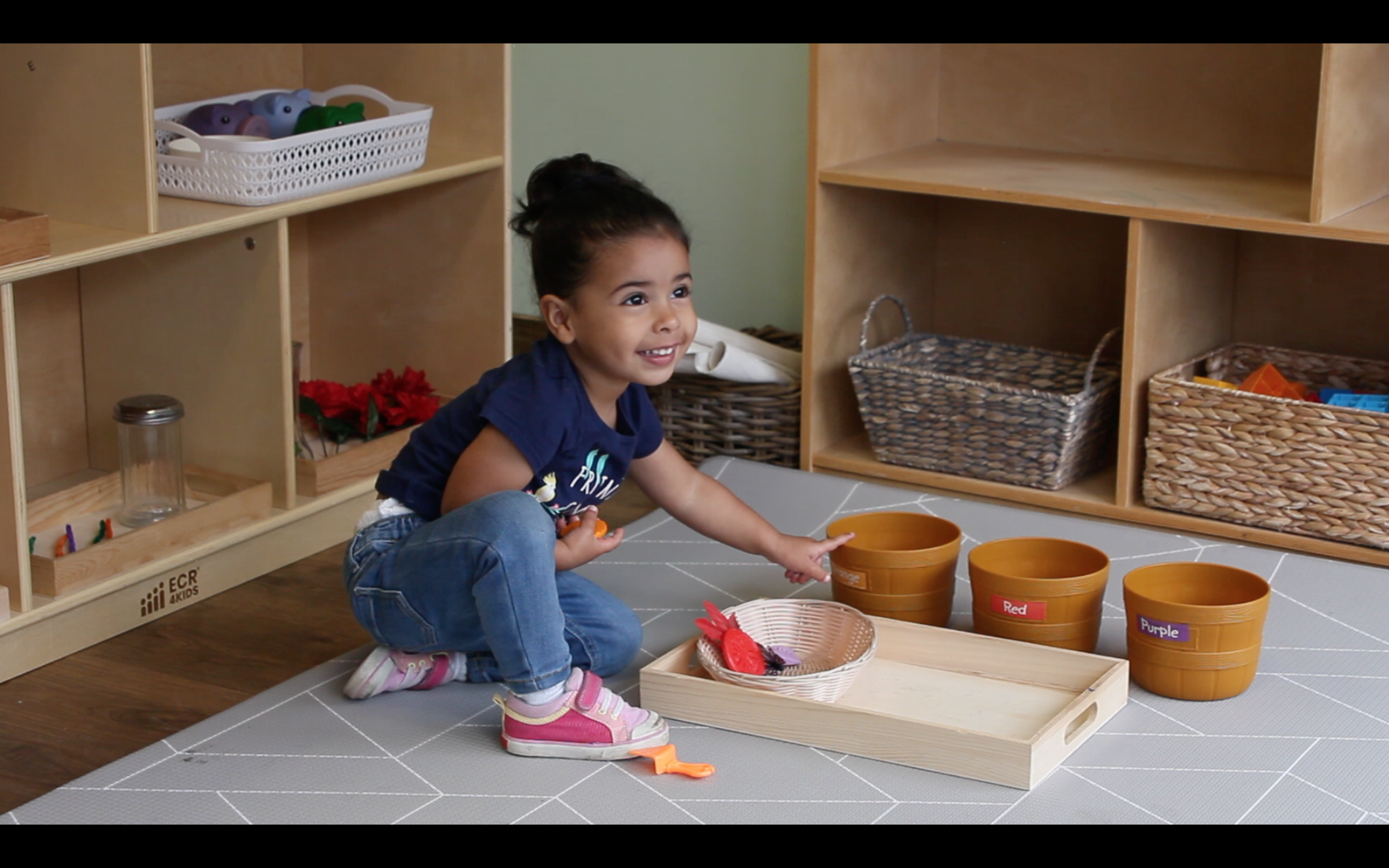

For toddlers and twos, learning is active and hands-on. Children are encouraged to explore materials, make choices, test ideas, and learn through their interactions with teachers, peers, and their environment.
Teachers intentionally provide opportunities for children to:
One of the most important parts of this stage is “I can do it myself!” Teachers intentionally look for opportunities for children to participate in their own care and classroom routines.
Children are encouraged to make choices, help with classroom responsibilities, attempt tasks independently, and practice new skills with support when needed. Teachers balance allowing children to try things for themselves with providing just enough assistance to help them be successful.
Routines such as meals, handwashing, toileting, cleanup, transitions, and getting dressed become meaningful opportunities to practice communication, motor skills, sequencing, problem-solving, and independence.
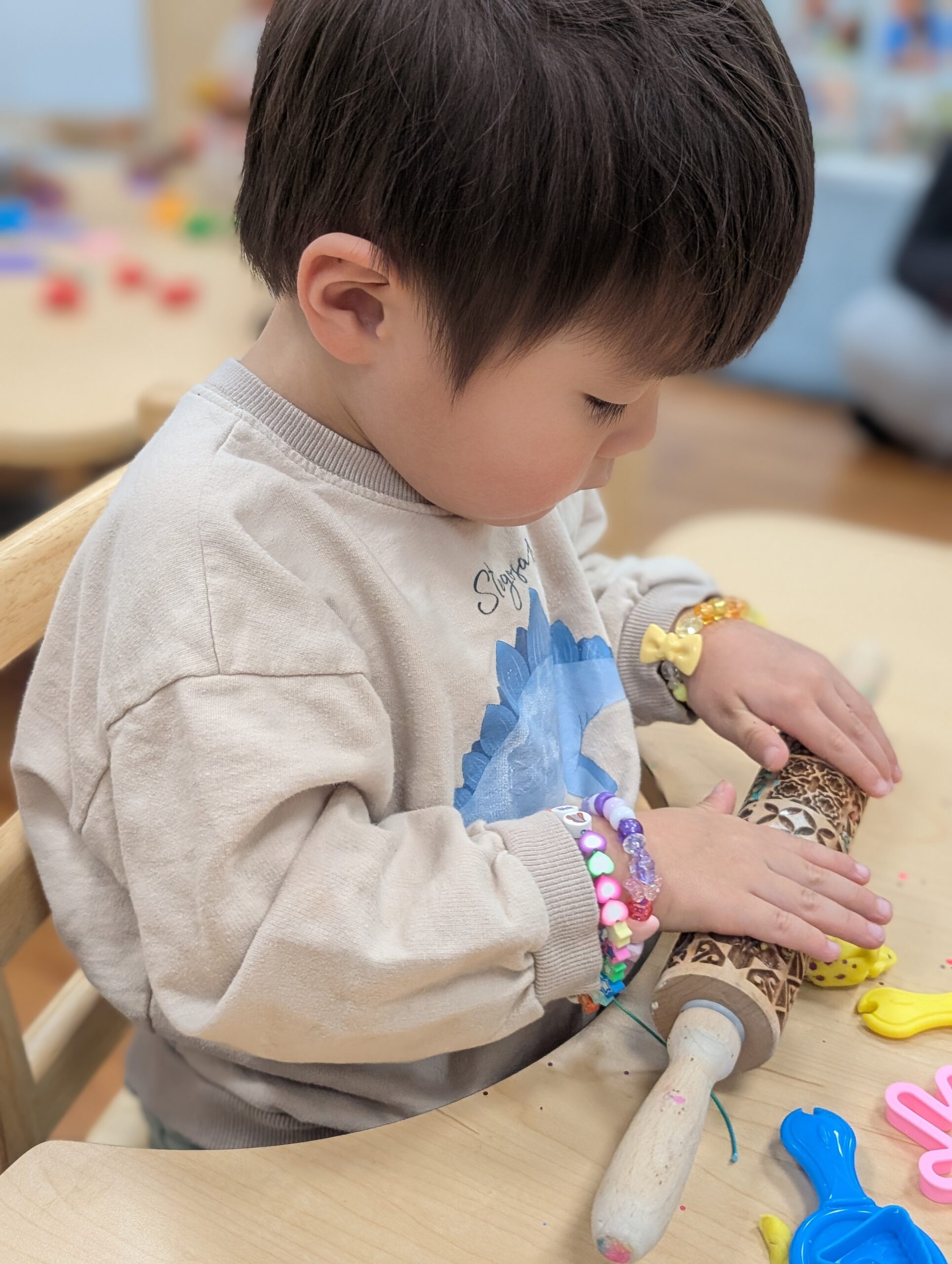
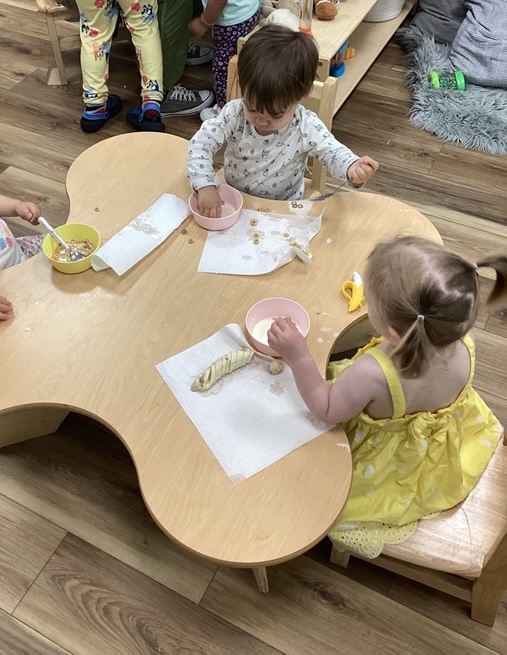
Play becomes increasingly complex during the toddler and two-year-old years. Children begin to use materials in new ways, imitate experiences from their lives, engage in early pretend play, and develop longer interactions with teachers and peers.
Teachers observe children’s play and use their interests as opportunities to extend learning. A child interested in filling and dumping might explore quantity and measurement. A child fascinated by animals might investigate movement, sounds, habitats, and books. A child who loves caring for dolls might explore relationships, language, and self-help skills through dramatic play.
Children’s interests provide the starting point, while teachers help extend the learning.
Language development is a major focus during these years. Children move from communicating primarily through gestures and single words toward using increasingly complex language to express ideas, ask questions, tell stories, and interact with others.
Teachers create frequent opportunities for conversation throughout the day. They model language, introduce new vocabulary, ask questions, listen to children’s ideas, and provide words to help children communicate their experiences and emotions.
Books, songs, rhymes, storytelling, dramatic play, and everyday conversations all contribute to children’s growing communication and early literacy skills.
Toddlers and twos are learning how to navigate relationships, express strong emotions, and begin to understand the perspectives of others. Teachers provide consistent support as children learn to identify feelings, communicate their needs, wait, take turns, share space, and begin solving problems with others.
Rather than expecting children to already know how to manage these situations, teachers intentionally teach and model the skills children need. Children are supported with language, strategies, and responsive guidance as they develop increasing confidence and independence.
Toddlers and twos need an environment that allows them to move, make choices, explore, and practice independence. Classrooms are intentionally arranged with accessible materials and clearly defined spaces that invite children to participate in different types of play and investigation.
Materials and experiences change as teachers observe children’s development and interests. The environment provides both familiar opportunities for children to practice developing skills and new challenges that encourage them to try something different.
Our goal is to create a classroom where children can confidently say, “I can try,” “I can help,” and “I can do it!” while knowing that a trusted teacher is nearby to support them.


Music is an important part of the Toddlers and Twos experience. Children participate in live music classes every day and have additional opportunities to sing, move, dance, play instruments, and explore music throughout their classroom day.
As children grow, they become more active participants in musical experiences. They may copy movements, repeat words and sounds, follow a beat, experiment with instruments, and begin to anticipate familiar parts of songs and routines.
Music experiences provide opportunities for children to:
As children develop stronger fine and gross motor skills, they are introduced to instruments that encourage different types of movement, such as tapping, plucking, gliding, and using mallets. These experiences help children connect their movements with the sounds they create while building coordination and familiarity with different instruments.
Music also supports growing language skills. Children practice new words through songs, gestures, and movement while having opportunities to repeat lyrics, make up sounds, and experiment with their voices. Music Specialists use books, pictures, and other materials to help children connect music with stories and meaning.
Music naturally becomes part of the classroom day as well. Teachers use songs during greetings, transitions, clean-up, routines, movement, and opportunities to connect with children.
For toddlers and twos, music provides a joyful way to build language, listening, memory, movement, coordination, self-expression, and social connection while exploring, creating, and having fun together. When they move up to preschool, they know how to join a song, make a sound on purpose, and move when the music moves.