
The preschool years are a time of expanding curiosity, growing independence, and increasingly complex thinking. Children are asking questions, developing theories, solving problems, forming friendships, and becoming more confident in expressing their ideas. Our preschool curriculum builds on these abilities by providing opportunities for children to investigate, create, collaborate, communicate, and make meaning through play and hands-on experiences.
At this stage, children are becoming increasingly intentional learners. Teachers listen closely to children’s ideas and interests and use them as opportunities to deepen learning. Children are encouraged to ask questions, make predictions, test ideas, revisit their thinking, and share what they discover.
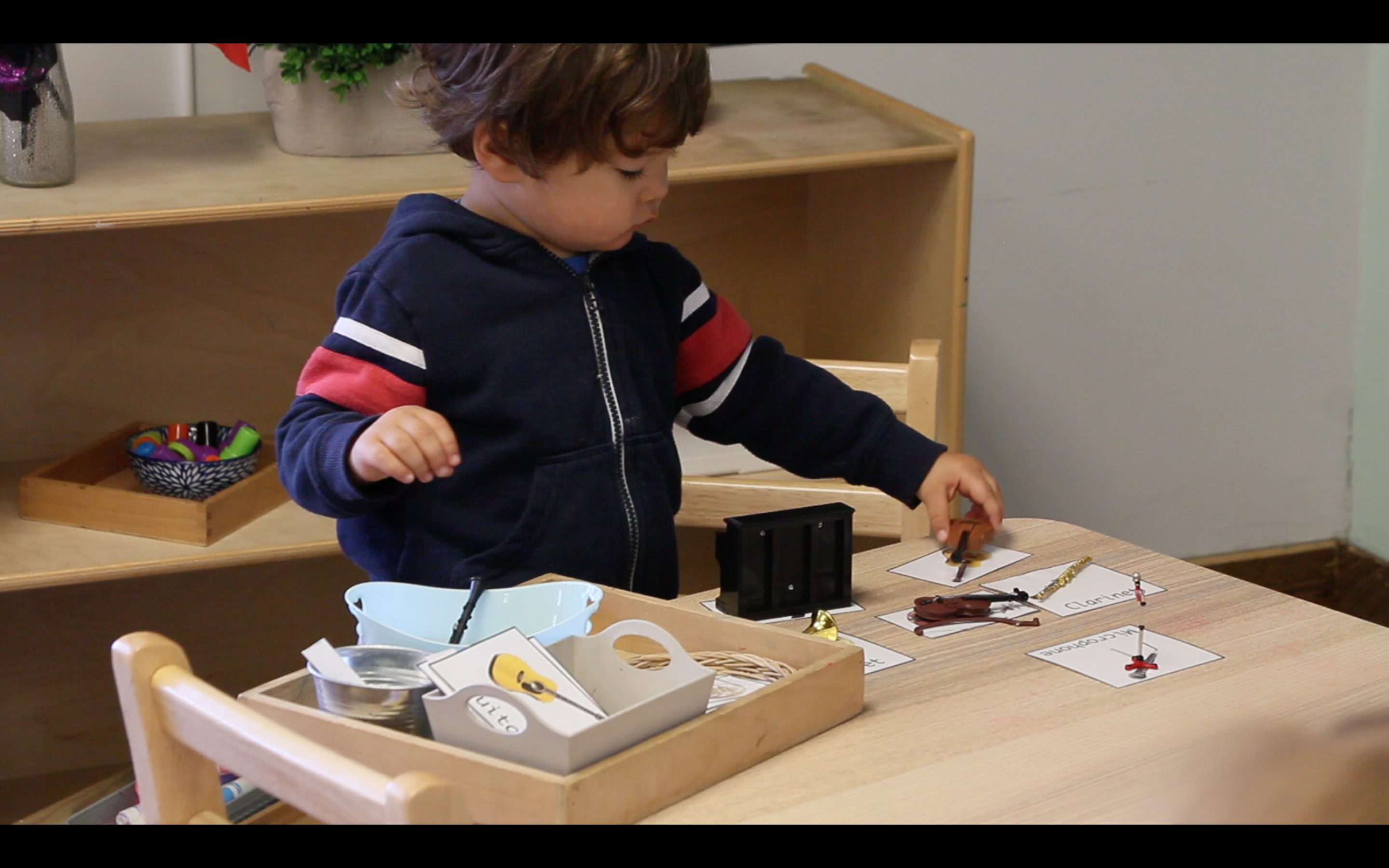
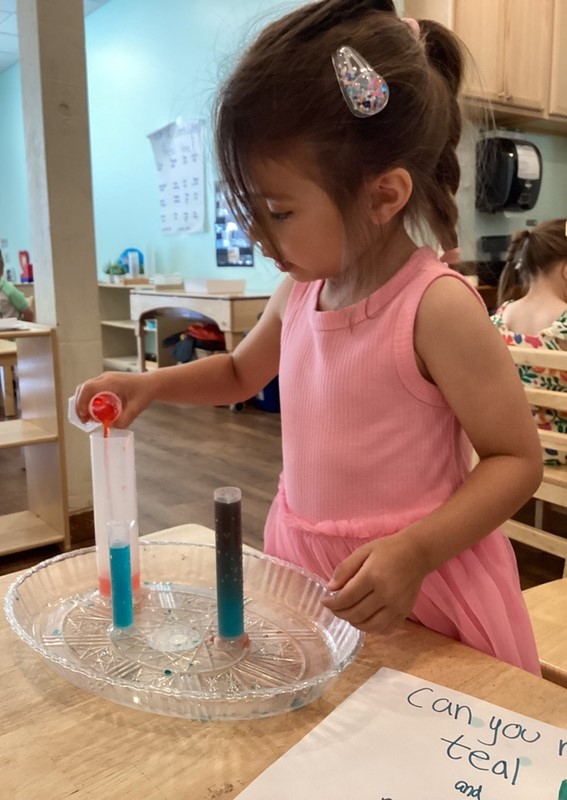
Preschool children learn through a combination of intentional teacher-guided experiences and child-directed exploration. Teachers create opportunities for children to:
| Time | What we do |
|---|---|
| 8:00–9:00 | Arrival, free play, breakfast. Teachers greet families. Children put things in cubbies, change shoes, wash hands, and answer a question of the day. Centers are open. Snack is at one table; children come when they are hungry. |
| 9:00–9:15 | Circle. A greeting song, a look at the day, and a chance to share. A child who does not want the rug gets a quiet job nearby. |
| 9:15–10:00 | Choice time and small group. Children move through the room. Teachers sit with a small group when there is something to build on from the current study or from what they noticed the day before. |
| 10:00–10:15 | Story. A short read-aloud, with talk about the book. |
| 10:15–11:40 | Outside. Play, a walk to the park when we can. Bad weather: big movement indoors. |
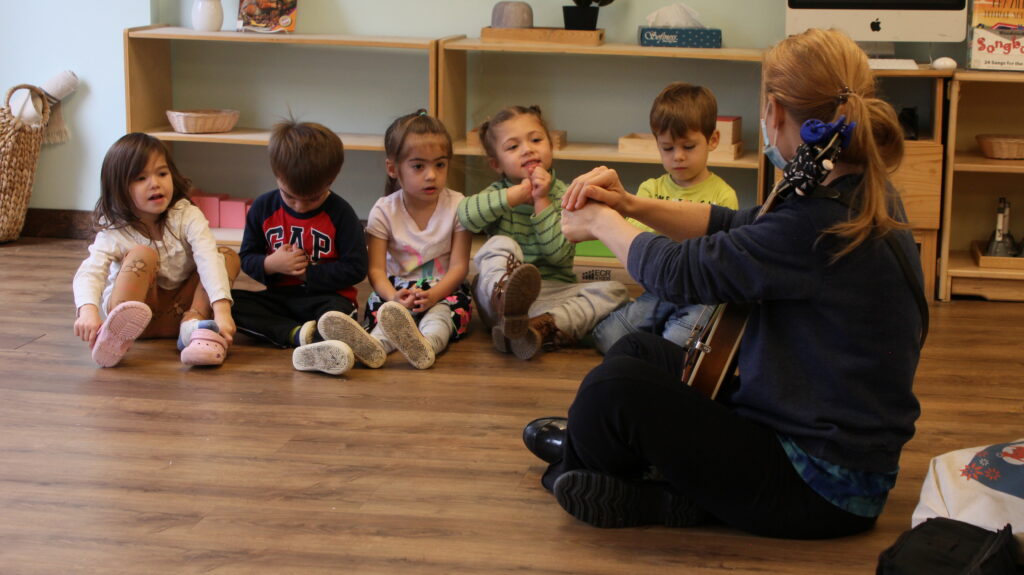
| 11:40–12:00 | Music. Live class with our Music Specialist. Teachers stay with the group. |
| 12:00–12:30 | Lunch. Teachers sit with children. When a child is done, they clean up and start a mat. |
| 12:30–2:30 | Rest. Lights down, quiet room. Books on mats first, then nap. Children who wake early get a quiet activity on the mat. |
| 2:30–3:00 | Wake up. Mats away, bathroom. |
| 3:00–3:20 | Snack and a short group. Eat, stretch, talk about the afternoon. |
| 3:20–4:30 | Outside again. |
| 4:30–4:45 | Story. |
| 4:45–6:00 | Quiet choice and goodbye. Fewer centers open. Drawing, books, table toys. Teachers talk with families as they arrive. |
Preschool children are natural investigators. Their questions and theories provide opportunities for teachers to extend learning beyond a single activity or lesson.
Classroom investigations may begin with something children notice, wonder about, or want to understand. Teachers help children explore their questions by providing materials, experiences, books, conversations, and opportunities to investigate further.
Children may predict, observe, compare, measure, test, record, and revisit their ideas as they work to make sense of something. Through these experiences, children are developing not only knowledge about a particular topic but also the skills and dispositions needed to become confident lifelong learners.
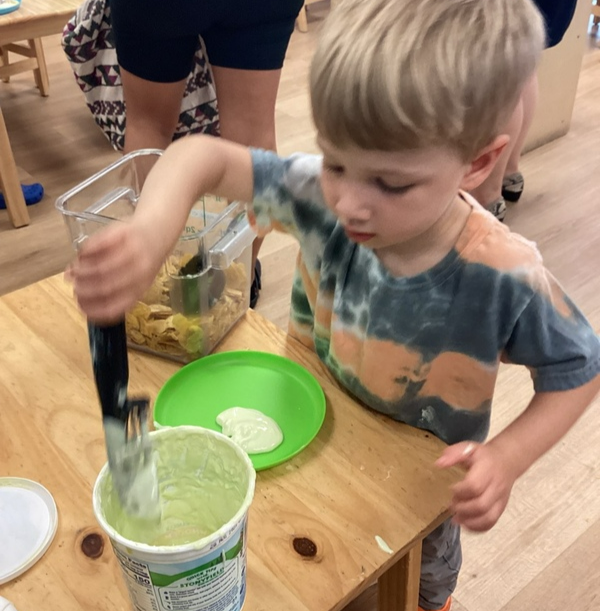
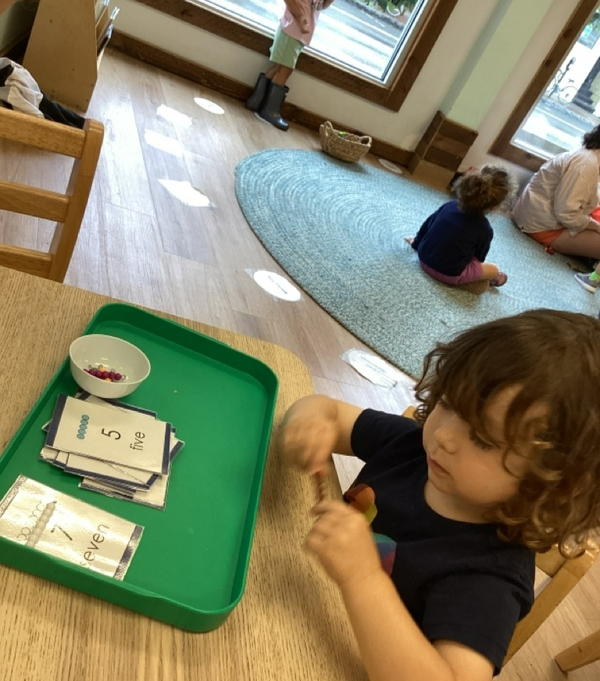
Literacy and mathematics are intentionally woven throughout the preschool day rather than limited to designated lesson times.
Children encounter meaningful opportunities to read, write, count, compare, measure, sort, represent ideas, and solve problems during play and classroom routines. A block structure can become an opportunity to explore measurement and spatial relationships. A restaurant in dramatic play can inspire menus, signs, writing, counting, and conversations. A classroom investigation can lead to new vocabulary, informational texts, charts, or opportunities to record observations.
Teachers use children’s interests and play as opportunities to make these concepts meaningful and connected to real experiences.
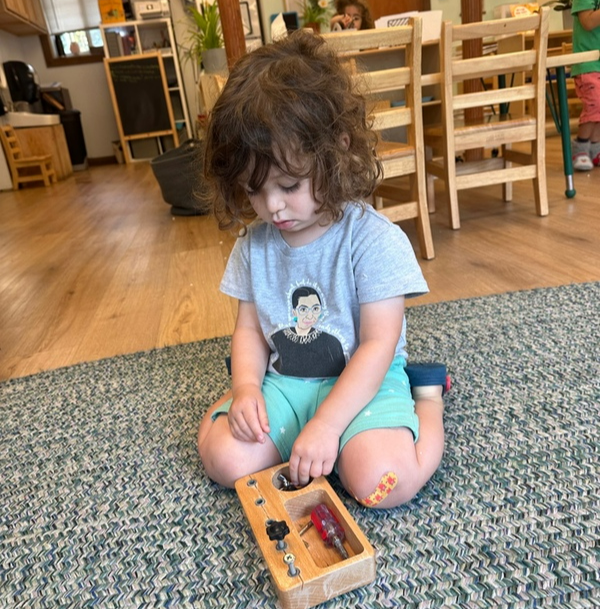
Preschoolers are increasingly capable of taking responsibility for themselves and their classroom community. Teachers provide opportunities for children to make choices, manage their belongings, participate in routines, care for materials, contribute to classroom responsibilities, and advocate for their own needs.
Children are encouraged to attempt challenges independently while knowing that teachers are available to provide support when needed. These experiences help children develop confidence, persistence, decision-making, and problem-solving skills.
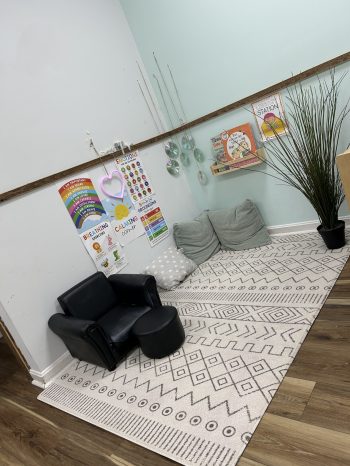
Preschoolers are continuing to develop their understanding of emotions, relationships, and social problem-solving. Teachers support children in recognizing and communicating their feelings, understanding others’ perspectives, developing friendships, solving conflicts, and working collaboratively.
The classroom community provides daily opportunities to practice these skills. Children are encouraged to share ideas, listen to others, negotiate, compromise, and work together toward shared goals.
Preschool classrooms are designed to encourage choice, collaboration, creativity, investigation, and increasingly independent learning. Children have access to a variety of materials and learning areas that allow them to explore their interests and develop skills across the curriculum.
Teachers thoughtfully arrange and adapt the environment based on their observations of the children. Materials may be introduced, changed, or extended to encourage new questions and deeper exploration.
The goal is to create an environment where children feel confident asking “Why?”, “What if?”, and “How can we find out?” and where their ideas are valued as an important part of the learning process.
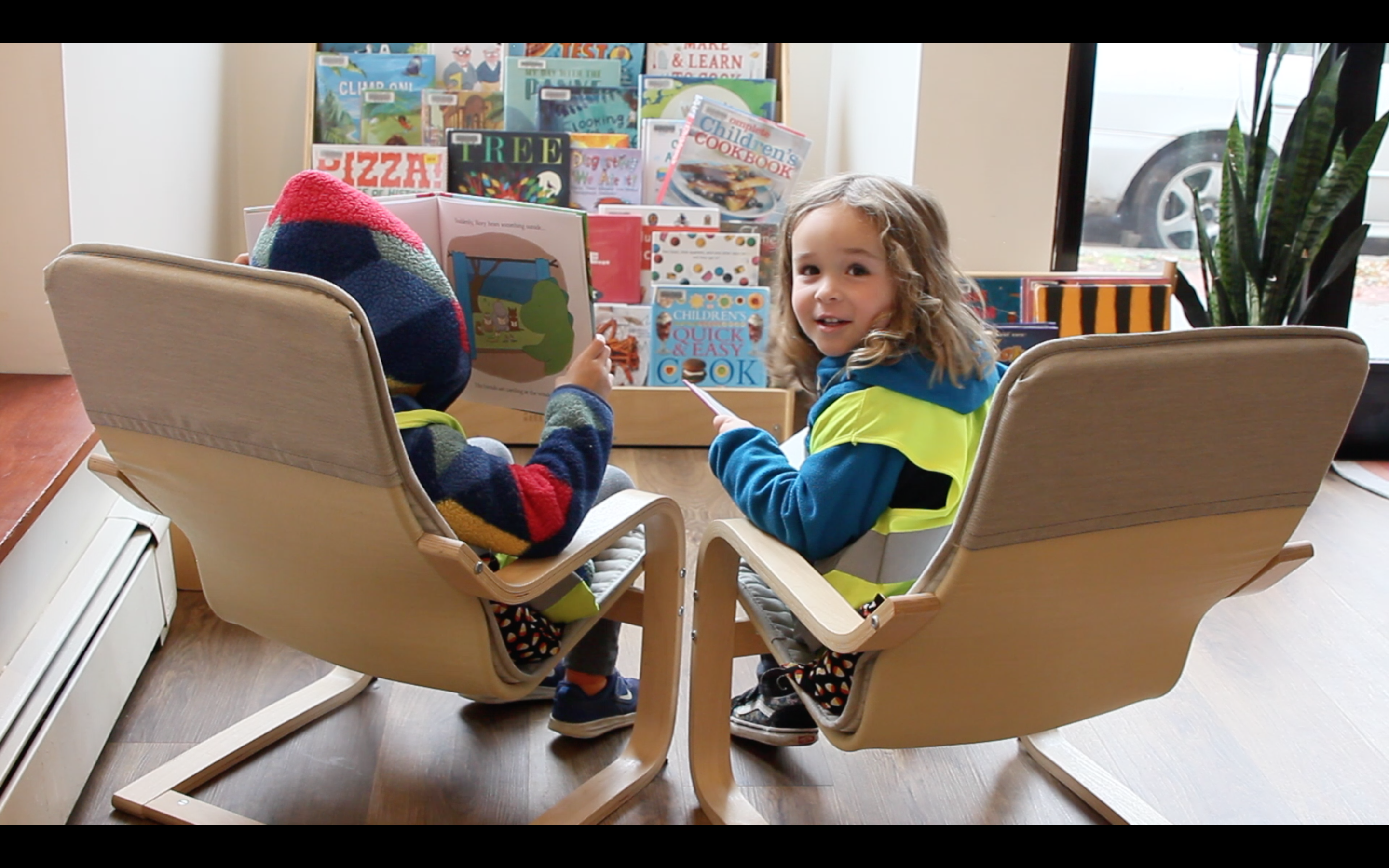
Music is a signature part of the preschool experience. Through daily live music classes, children build on the skills they developed as infants and toddlers while becoming more confident singers, movers, listeners, and musicians.
Preschoolers are ready to explore music in more complex ways. They experiment with rhythm, tempo, patterns, pitch, and movement while learning new songs and exploring a variety of instruments. Children also have opportunities to sing songs from different cultures and in their original languages, helping them build a broad and diverse musical repertoire.
As their skills grow, children may begin to:
Our Music Visit program gives children additional opportunities to explore different instruments, including percussion, pitched instruments, strings, and keyboards. Children can experiment with how instruments work, how different sounds are created, and how instruments can be used together.
Dance and movement are also an important part of preschool music. Children develop coordination and body awareness through activities such as galloping to rhythms, partner dancing, circle dancing, and creative movement.
Music extends beyond the daily music class and naturally becomes part of classroom life. Teachers use songs, rhythm, and movement during routines, transitions, and learning experiences, creating additional opportunities for children to listen, participate, and express themselves.
Through music, preschoolers develop their creativity, confidence, communication, coordination, and ability to collaborate while discovering new ways to express themselves and understand the world around them.
Example for classroom studies with daily live music. Exact dates may vary.
| Dates | Preschool study | Music |
|---|---|---|
| Aug 31 – Oct 9 | First 6 weeks | Social-emotional songs |
| Oct 13 – Nov 20 | Blocks | Social-emotional, then holiday songs |
| Nov 23 – Jan 8 | Lights & winter celebrations | Holiday songs |
| Jan 11 – Feb 19 | The human body | Songs about our bodies |
| Feb 22 – Apr 2 | Weather | Body songs, then nature songs |
| Apr 5 – May 14 | Insects | Nature songs (animals and nature) |
| May 17 – Jun 25 | Making music | Dance and movement songs |
| Jun 28 – Jul 23 | Bread | Dance, then songs about food |
| Jul 26 – end of year | Restaurants & end of year | Food songs, then cultural connections |